The PySees solver
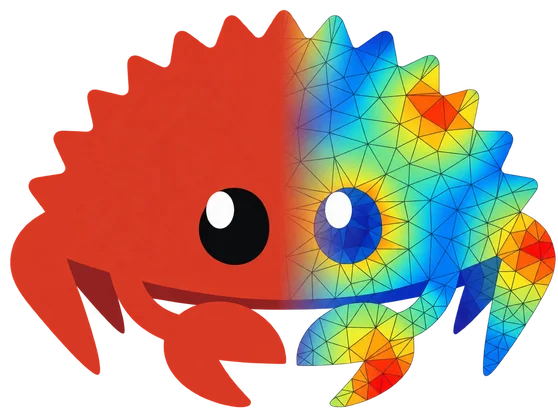
Carapace
An open-source finite-element engine written in Rust and compiled to WebAssembly. It is what lets PySees run your model in the browser, with no server and no local OpenSees install.
Built to match OpenSees
Carapace is a from-scratch implementation of the subset of OpenSees that gets used in practice, not a port. Element and material formulations follow their OpenSees counterparts, and the PySees test suite runs the same models through Carapace and real OpenSees, requiring displacements, reactions and element forces to agree step by step.
Anything PySees can run, you can also export as an OpenSeesPy script and run in OpenSees. Carapace is meant for fast iteration in the browser, not to replace OpenSees for the full range of models it supports.
What it covers
- Elements: Truss, elastic and fiber (displacement- and force-based) beam-columns, zero-length springs, MITC4 and DKGT shells, and 2D continuum elements, in 2D and 3D where applicable.
- Materials: Elastic, ElasticPP, Steel01/02, Concrete01/02, Hysteretic, Pinching4, Gap/Ent, plus Parallel, Series and MinMax combinators.
- Analysis: Static (load and displacement control, Newton variants, line search, arc-length), eigen (modal) and transient analysis.
The full, current list lives in the repository README.
How it runs
Your model is solved on your own machine, inside the browser tab. There is nothing to install, no queue and no upload, and the app stays responsive while a long analysis runs. Your models and results never leave your computer.